A few years ago, I started reading about “Meet My Child” sheets that parents send to school at the beginning of the year.
I thought it was a fabulous idea.
I started working on one for my daughter—her strengths, her struggles, things that help, and things I wanted her new teacher to know.
Then I stopped.
As I looked at everything I was putting on that page, I realized I wasn’t comfortable sending it to school.
I’ve always tried to follow the rule that I don’t write down anything I wouldn’t want everyone to read.
My daughter’s name would be across the top. I might include her picture. And naturally, some of the information I wanted her teacher to know involved her struggles.
What if that paper was accidentally left sitting on a desk? What if another child picked it up?
Would I want another child reading about the things my daughter struggles with every day?
If I pared it down and left out the things that were difficult for her, it wasn’t a very helpful introduction for her teachers.
I Still Wanted Her Teachers to Know Her
That left me with another problem.
Here was my child heading into a new grade with new teachers. There were things I genuinely wanted them to understand about her.
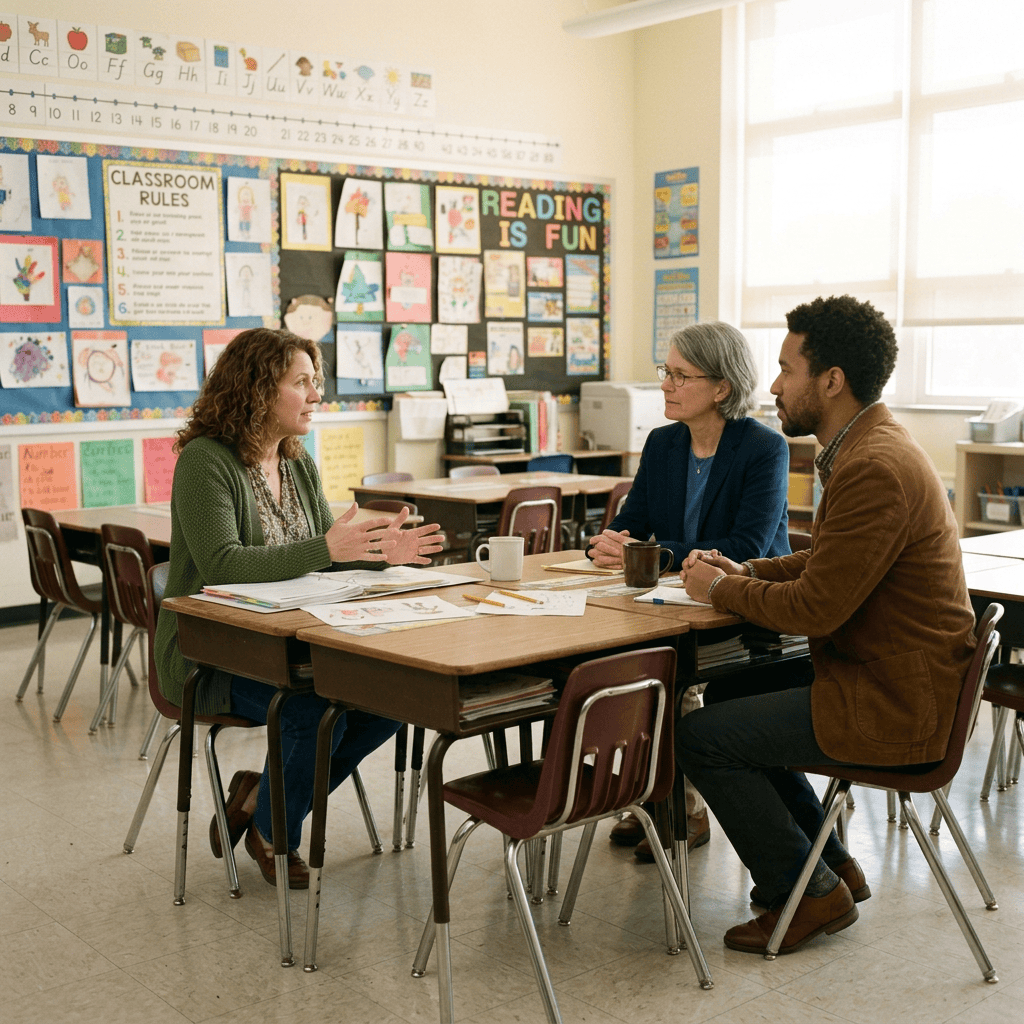
So instead of sending a paper, I reached out during the first couple weeks of school and asked if we could have a quick introduction meeting.
Just me and the teacher. My daughter doesn’t come to these meetings. I want to be able to talk openly while still being thoughtful about what she needs to hear about herself.
And importantly, I wanted to meet before there was a problem.
Before school became difficult. Before everyone settled in and behaviors started to change. Before I was emailing because something had gone wrong.
I wanted our first real conversation to simply be, This is my kid. Here’s a little about her.
That first meeting went so well that I’ve continued doing it every year throughout elementary school.
At first, though, I felt guilty asking for a teacher’s time. I know how busy the beginning of the school year is, and part of me wondered whether I had any business asking for a private meeting when there wasn’t even a problem.
After that first meeting, I stopped feeling quite so guilty about asking. A few minutes at the beginning of the school year can make communication easier for the rest of the year.
I just had this year’s meeting. My daughter has two teachers this year, so I met with both of them together. In previous years, I’ve met with just her primary teacher or with more than one teacher, depending on how her classroom and support team were structured.
Once again, I walked away feeling like we had opened a line of communication for the year ahead.
I Start With Who She Is Outside of School
One thing I’ve learned is that I don’t want to start these conversations with everything that’s hard.
This year, I brought along a few things my daughter has created on her own time.
Some of her sewing projects. Tiny, incredibly detailed clay animals. Drawings and other crafts she’s made.
I talked about her love of animals, pretend play, fashion design and makeup.
Those things matter to me because school doesn’t always provide an opportunity for all of her strengths to show.
A child who struggles to sit still, pay attention, read or complete schoolwork can also be incredibly creative, persistent and capable.
I want her teachers to meet that child, too.
Then We Talk About What Can Make School Hard
I also share the parts of her background that I think will help her teachers understand where she’s coming from.
We talk about her ADHD, anxiety and dyslexia and how those can affect her school day. I also share some of her early background and the impact of trauma. I’m not trying to give her teachers every detail of her history. I just want them to have enough context to understand that sometimes there’s more behind a behavior than what they might see in the moment.
I explain some of the things we’ve learned over the years and areas where she may need additional support.
We also talk about medication.
Her medications have changed over the years, so I let her teachers know that I’ll tell them when something changes. I also ask for their observations.
I can see what happens at home, but I can’t see what happens during six or seven hours of school.
If a teacher suddenly notices that she’s unusually tired, anxious, distracted, irritable or just not herself, that’s information I want to know.
I Tell Them They Don’t Have to Wait to Contact Me
This may be one of the most important things I say during the meeting:
Please reach out.
I don’t want a teacher worrying that I’ll be upset or defensive if they tell me something isn’t going well.
If something seems strange or out of character, I want to know.
And if she’s struggling, we have a whole village of people who can help us figure out what might be going on. I want her teacher to feel like part of that team rather than someone on the outside of it.
We Talk About Homework, Too
I also try to be upfront about homework.
My kiddo is DONE after school.
By the time she gets home, she is tired and wants absolutely nothing to do with school until she walks back through those doors the next morning.
She also has two hours of reading tutoring each week, so there is already additional learning happening outside the school day.
I tell her teachers that we’ll do our best with homework, but I can’t promise that every assignment will be completed every week.
I’d rather have that conversation at the beginning of the year than wait until we’re all frustrated about an unfinished packet.
And It’s Not Just About Academics
There are things I want to know that have nothing to do with grades.
Is she getting along with other kids?
Is someone picking on her?
Is she excluding someone else?
Is she being bossy or having trouble navigating friendships?
Social skills can sometimes require a little extra attention for her. Her teachers see an entire part of her social world that I don’t.
If something is developing, I’d much rather know early so we can help her work through it.
The Meeting Isn’t About Giving Teachers Instructions
I’m not walking into these meetings with a list of demands.
And I’m certainly not trying to tell a teacher how to teach my child.
I’m trying to give them some context.
Here are her strengths. Here are some things that can be difficult. Here’s what we’re working on. And please know that you can talk to me.
That’s really it.
It doesn’t need to be elaborate.
For our family, I’ve simply found that a conversation works better than a “Meet My Child” sheet ever could.
A piece of paper can give a teacher information.
A conversation can start a relationship.
And that’s what I’m really trying to accomplish before the school year gets complicated.
If you’re also navigating ADHD, dyslexia, school struggles, IEPs and all the other messy parts of parenting, you’re welcome to follow along. I share what we’re learning as we go—not because I have all the answers, but because sometimes it helps to know another parent is figuring it out too.
Subscribe below to get new posts in your inbox.
You may also enjoy
When Homework Becomes a Battle for My Child With ADHD: When Do I Stop Pushing?

Leave a Reply